

03 · Service line

Intelligent Automation

Eliminate repetitive work at scale

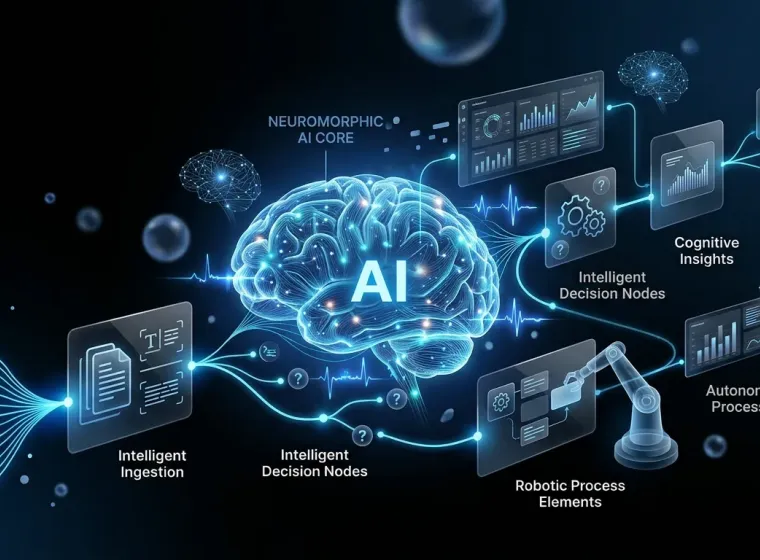
Automated workflow moving through connected systems

Remove repetitive work, accelerate approvals and surface insight — inside the systems you already run.

We map where the time actually goes, then design AI-driven automation that removes it. Not a parallel system nobody logs into: automation integrated into your existing workflow tools.

A human stays in the loop wherever the cost of being wrong justifies one. Deciding where that line sits is most of the design work.

What you get

  • Process mining and automation opportunity map
  • AI-driven workflow and approval automation
  • Email and correspondence triage
  • RPA extended with AI judgement
  • Zoho and business-platform AI integration
Typical duration
4–12 weeks
Best for
High-volume repetitive process
Measured on
Turnaround and hours returned
Languages
Arabic and English
Workflow AIEmail TriageRPA + AI

Questions

What clients ask about this service

Which processes are best suited to intelligent automation?

High-volume, repetitive processes where staff time is visibly lost: approvals, email and correspondence triage, casework and back-office flows. If the work repeats at volume and people spend real time on it, it is a candidate.

How do you decide what to automate first?

We start with process mining: mapping where the time actually goes, then producing an automation opportunity map. That map shows where AI-driven automation would return real time, so the work starts where it will make the most difference.

Will we need to adopt a new system?

No. The automation is built into the workflow tools and business platforms you already run, including Zoho and other business platforms, not delivered as a parallel system nobody logs into. Integration with your existing systems is part of the design from the start.

Will people stay in control of decisions?

Yes, wherever the cost of being wrong justifies it. A human stays in the loop for those decisions, and deciding exactly where that line sits is most of the design work. Routine, low-risk steps can run automatically, while consequential ones are routed to a person.

How is intelligent automation different from traditional RPA?

Traditional RPA follows fixed rules; intelligent automation extends it with AI judgement. That lets automation handle steps that need interpretation, such as triaging email and correspondence, accelerating approvals and surfacing insight from the work as it moves through your systems.

How long does an automation project take, and how is success measured?

Typically 4–12 weeks. Success is measured on turnaround time and hours returned to your staff: the time the automation actually removes from the process, compared with how it ran before. Like every FuegoAI engagement, it carries a KPI framework from day one.

Ready to start?No-obligation discovery call